Thursday:
1.) Transcription Factors Roll Play with Steroid Hormone Diffusing into the cell to make collagen.
2.) Estrogen and Natural Selection Picture:
What do you notice about these two pictures?
3.) Go over final exam
Friday:
Quick going over different types of evolutionary structures. Then around the room to classify scenarios and pictures based on evolutionary vocabulary.
SWBAT: Describe scenarios when Hardy-Weinberg equilibrium is violated.
1.) Quick Definitions of micro-evolution situations: Natural Selection, Genetic Drift (Founder Effect, Bottleneck Effect), Gene Flow, Adaptive Radiation.
2.) Around the room scenarios to identify Homologous Structures, Analogous Structures, Natural Selection, Genetic Drift, Gene Flow, Adaptive Radiation.
Monday
Day One: Species Definitions and Speciation Types...
SWBAT: Describe the different definitions of species. Show different Pine Cones and ask "How did these trees have cones that are different?"
Quick Notes: 3 different Definitions 14.1-14.2 Species Definitions 4 Different Types in notes from reading 14.2
Whiteboarding Scenarios What Happened?
Notes...
-Reproductive Barriers 14.3
How different species form
Allopatric Speciation (Different environments, genetic isolation)
Sympatric Speciation (Polyploid speciation)
Adaptive Radiation (adaptive radiation)
Show pine cones and have them relate to this speciation.
Structure and Function of Pine Branches and cones.
1.) Draw and describe what you think the parts of the pine branch are for.
2.) Then have them read the parts of the book related to conifers for homework.
3.) Show different pine cones to show speciation/divergence.
Tuesday
SWBAT: Apply the different forms of speciation in different scenarios.
1.) 100 mutations between two species occur in 50,000 years. How long ago did two species diverge from one another if 340 mutations are measured between two species?
2.) How can we find out when humans first started wearing clothes? Guesses? Why? Human Lice Evolution Video http://video.pbs.org/video/1790635347/
Wednesday
SWBAT: Descriptions of controversies from your radio shows.
1.) Vocabulary Review Quiz
2.) Working with groups to create white board presentation of radio show.
Thursday
1.) Hardy Weinberg Lab Taste-Testing with PTC.
2.) Nova Science of Picky Eaters
Friday-Go into the tree of life (fossil dig image in textbook)
Evolution: Stromatolites Nova Clip
Day Five
Monday, December 19, 2011

Saturday, December 10, 2011
Finishing Biotechnology, Going to Evolution Start
Evolution 12/12-12/16:
Keys: Evidence Benefits and Drawbacks, Hardy Weinberg Equilibrium.
12/12:
-Last week whiteboarding and going over sections in chapter 12 that are important. (Everything in lab packet plus...12.1, 12.2, 12.6, 12.7, 12.8, 12.11, 12.12, 12.13, 12.17, 12.18,
-Gel Electrophoresis Notes
12/13: Evolution Vocabulary Chapters 13-15. How did the different forms of life get here?
Chapter 13.4-13.5 Types of Evidence for Evolution: Their positives and negatives.
-Students create chart in their notebooks to summarize what others present in their whiteboards.
12/14: Evolution Vocabulary Chapters 13-14
12/15-12/16 Hardy-Weinberg: How do we know if evolution is occuring?
Hardy Weinberg Conditions:
http://www.k-state.edu/parasitology/biology198/hardwein.html
12/19: Finish Evolution: Final
Keys: Evidence Benefits and Drawbacks, Hardy Weinberg Equilibrium.
12/12:
-Last week whiteboarding and going over sections in chapter 12 that are important. (Everything in lab packet plus...12.1, 12.2, 12.6, 12.7, 12.8, 12.11, 12.12, 12.13, 12.17, 12.18,
-Gel Electrophoresis Notes
12/13: Evolution Vocabulary Chapters 13-15. How did the different forms of life get here?
Chapter 13.4-13.5 Types of Evidence for Evolution: Their positives and negatives.
-Students create chart in their notebooks to summarize what others present in their whiteboards.
12/14: Evolution Vocabulary Chapters 13-14
12/15-12/16 Hardy-Weinberg: How do we know if evolution is occuring?
Hardy Weinberg Conditions:
http://www.k-state.edu/parasitology/biology198/hardwein.html
12/19: Finish Evolution: Final
Monday, November 14, 2011
DNA Structure and Function/Virus/Bacteria
Tuesday 11/8
Go over all tests
1.) DNA Experiments worksheet with predicted results vs. actual results.
Hershey Chase Experiment, Pneumonia Experiment
Wednesday 11/9
DNA Corrections
1.) Start going through vocabulary.
2.) Replication vocabulary first, protein production second
3.) RNA vs DNA homework chart.
Thursday 11/10
1.) Clean up DNA Models.
2.) Review Protein Structure and Function, DNA Structure and Function.
3.) Vocabulary List: Transcription, Translation,
Friday 11/12
Continue Hershey Chase experiment. Mehlson-Stahl Experiment Explanation.
1.) Finish vocabulary
2.) Replication detail
3.) Transcription detail
4.) Translation detail.
5.) Hershey Chase Experiment Worksheet.
6.) Vocabulary Continue
Monday
-Exon/Intron Hook
1.) Continue Notes on Translation (elongation)-Advance Detail Videos, ppt slides from Chapter 10.10-10.15
2.) Transcription/Translation Utah Genetics for Speed.
3.) Utah Genetics Protein Mutations
4.) Translation Vocabulary
Tuesday (11/15)
View DNA to mRNA to Protein as a system of production.
Vocabulary: Differentiation
Transcriptional Level:
-Histones binding and suppressing DNA
-No polymerase binding to that section of the DNA
-Other suppressor proteins not allowing RNA polymerase to bind to the DNA
-Lick a Rat
mRNA Level:
-Lacking a stabilizer
-Breaks down easily
-Splicing (take out introns leave in introns)
Translational Level:
-Protein being unstable
-Protein needing an extra treatment (adding a phosphate)
1.) Review from memory, transcription draw from memory, translation draw from memory.
2.) Combine with two other people.
3.) Whoever had the least details in their first picture does the oral description.
Wednesday: DNA to protein from memory.
-Whiteboarding: Cold Sore Viruses: How do they work?
-Bacteria and Virus Vocabulary, ppt. images rest of Chapter 10.
-Lytic vs. Lysogenic Vocabulary
Thursday:
Khan Bacteria and Virus Video
Friday:
Khan Academy More Videos
Monday:
1.) Stem Cell Guy
2.) Describe transcription and translation whiteboarding from memory (then pass back papers)
3.) Add a detail you don't think another group will have
4.) Go to book to add any missing details especially from 11.7.2 Summative figure.
4.) Write down what you need to remember.
Tuesday:
SWBAT: Variation in a Species Lesson.
Quick Review: DNA to Protein based on DNA code in flipchart, Signal Transduction Pathway labeled image in flipchart.
Main Lesson: Variation:
1.) Lytic vs. Lysogenic, show with DNA paper models then have students categorize statements.
2.) Sperm Production with coins sheet (independent assortment)
2.) Conjugation, Transformation, Transduction, Random mutation, vocabulary.
Wednesday:
Signal Transduction Intro with 13 cards: Hydrophilic hormone, Membrane Protein, Relay Protein #1, Relay Protein #2, Relay Protein #3, Transcription Factor, RNA polymerase, DNA, mRNA, Ribosome, Protein, Hydrophobic hormone (steroid).
1.) Conjugation, Transformation, Transduction, Random mutation categorization.
2.) Prokaryotic vs. Eukaryotic Venn Diagram from memory in notebook, then add the differences in eukaryotic and prokaryotic DNA to protein.
3.) Change: Concept Activity: Independent Assortment activity. Students complete three columns: Chromosome #, Gamete #1 Mom or Dad's Chromosome, Gamete #2, How many possibilities. Mom
4.) List 6 you had trouble with. Go to others and see theirs and comment about how that one helped you understand more clearly.
5.) Reading other books and placing post it notes in their books about ones that you were confused about.
Monday: Review of DNA Structure and Function Chapters 10-11.
1.) Lac Operon Animation,
2.) Prokaryotic vs. Eukaryotic Transcription and Translation using AP Biology Free Response Question with Venn Diagram. Both: Transcription/Translation, Signal Transduction Pathways, Pro-Lac Operon, Circular DNA, One Chromosome, Euk: Introns/Exons, Hormones from other cells, Alternative Splicing, Post Translational treatments, Enhancers and Silencers, Homeotic Genes
3.) Vocabulary Additions: Enhancers vs. Silencers, Barr Bodies, Alternative Splicing, Homeotic Genes, Dedifferentiation, Prophage,
4.) Cloning on Utah Genetics Website.Vocabulary: Somatic Cell Nuclear Transfer
5.) Gene Activation Role Play
6.) Signal Transduction Pathway
7.) Going through images in Chapter 10-11.
Tuesday: Test
Wednesday: DNA Technology Start
Systemic Thinking About Cancer.
Quick: Whiteboard: Does a dormant cold sore virus look like in a lip cell?
SWBAT: describe and model how DNA is used by humans to manipulate traits.
12.1
- Use Figure 12.1 to build a model that represents what is occurring in this process.
-Create a step by step explanation to answer the question…”How do scientists put useful genes into crops?” and “How do scientists make the proteins (cellulase) necessary to stone-wash jenes?”
-Use the key terms from section 12.1
12.2
-Use Figure 12.2 to build a model that represents what is occurring in this process.
-Create a step by step explanation to answer the question… ”How and why do scientists cut and paste DNA?”
-Use the key terms from section 12.2
Thursday
Go Over Tests?
Vocabulary Chapter 12
SWBAT: Describe applications of DNA technology in evolution and human markets.
Go over Tests,
Clean up DNA models.
12.3
Genomic Library Vocabulary
12.4
-Use Figure 12.4 to build a model that represents what is occurring in this process.
-Create a step by step explanation to answer the question…”How do scientists make DNA for genes that are active in a cell?”
-Use the key terms from section 12.4
Friday:
SWBAT: Describe DNA strategies of PCR and Gel Electrophoresis
How do scientists make copies of DNA so they have a significant number of them.
PCR and Gel Electrophoresis
1.) PCR (Go through steps watch videos)
2.) Gel Electrophoresis (Role play and notes, Utah Interactive)
DNA Profiling
12.11
12.12 PCR, Utah Videos, Write from Memory, Whiteboarding.
How do scientists use molecules as a forensics tool?
12.13 Gel Electrophoresis
Review DNA structure of
Role Play: Hand out Papers with the following 1 kBasepairs (10 total), A positive Paper, and a negative paper, Have students combine using the DNA models and have them "run" a gel. Who goes the furthest? Who goes the shortest?
Utah videos, Repetitive DNA, STRs
Genomics 12.17-12.21 Vocab and discussion: Reading and Outlining
Monday-Friday 12/5-12/9: Cloning a fluorescent Gene Lab Start Geno Week
Monday: PCR and Pipetting.
Tuesday: Ligation
Wednesday: Transformation
Thursday: Plating
Friday: Observations
Evolution 12/12-12/16:
Keys: Evidence Benefits and Drawbacks, Hardy Weinberg Equilibrium.
12/12: Last week whiteboarding and going over sections in chapter 12 that are important. (Everything in lab packet plus...12.1, 12.2, 12.6, 12.7, 12.8, 12.11, 12.12, 12.13, 12.17, 12.18,
12/13: Evolution Vocabulary Chapters 13-15. Chapter 13.4-13.5 Types of Evidence for Evolution: Their positives and negatives.
12/14: Evolution Vocabulary Chapters 13-14
12/15-12/16 Hardy-Weinberg
12/19: Finish Evolution: Final Exam
Go over all tests
1.) DNA Experiments worksheet with predicted results vs. actual results.
Hershey Chase Experiment, Pneumonia Experiment
Wednesday 11/9
DNA Corrections
1.) Start going through vocabulary.
2.) Replication vocabulary first, protein production second
3.) RNA vs DNA homework chart.
Thursday 11/10
1.) Clean up DNA Models.
2.) Review Protein Structure and Function, DNA Structure and Function.
3.) Vocabulary List: Transcription, Translation,
Friday 11/12
Continue Hershey Chase experiment. Mehlson-Stahl Experiment Explanation.
1.) Finish vocabulary
2.) Replication detail
3.) Transcription detail
4.) Translation detail.
5.) Hershey Chase Experiment Worksheet.
6.) Vocabulary Continue
Monday
-Exon/Intron Hook
1.) Continue Notes on Translation (elongation)-Advance Detail Videos, ppt slides from Chapter 10.10-10.15
2.) Transcription/Translation Utah Genetics for Speed.
3.) Utah Genetics Protein Mutations
4.) Translation Vocabulary
Tuesday (11/15)
View DNA to mRNA to Protein as a system of production.
Vocabulary: Differentiation
Transcriptional Level:
-Histones binding and suppressing DNA
-No polymerase binding to that section of the DNA
-Other suppressor proteins not allowing RNA polymerase to bind to the DNA
-Lick a Rat
mRNA Level:
-Lacking a stabilizer
-Breaks down easily
-Splicing (take out introns leave in introns)
Translational Level:
-Protein being unstable
-Protein needing an extra treatment (adding a phosphate)
1.) Review from memory, transcription draw from memory, translation draw from memory.
2.) Combine with two other people.
3.) Whoever had the least details in their first picture does the oral description.
Wednesday: DNA to protein from memory.
-Whiteboarding: Cold Sore Viruses: How do they work?
-Bacteria and Virus Vocabulary, ppt. images rest of Chapter 10.
-Lytic vs. Lysogenic Vocabulary
Thursday:
Khan Bacteria and Virus Video
Friday:
Khan Academy More Videos
Monday:
1.) Stem Cell Guy
2.) Describe transcription and translation whiteboarding from memory (then pass back papers)
3.) Add a detail you don't think another group will have
4.) Go to book to add any missing details especially from 11.7.2 Summative figure.
4.) Write down what you need to remember.
Tuesday:
SWBAT: Variation in a Species Lesson.
Quick Review: DNA to Protein based on DNA code in flipchart, Signal Transduction Pathway labeled image in flipchart.
Main Lesson: Variation:
1.) Lytic vs. Lysogenic, show with DNA paper models then have students categorize statements.
2.) Sperm Production with coins sheet (independent assortment)
2.) Conjugation, Transformation, Transduction, Random mutation, vocabulary.
Wednesday:
Signal Transduction Intro with 13 cards: Hydrophilic hormone, Membrane Protein, Relay Protein #1, Relay Protein #2, Relay Protein #3, Transcription Factor, RNA polymerase, DNA, mRNA, Ribosome, Protein, Hydrophobic hormone (steroid).
1.) Conjugation, Transformation, Transduction, Random mutation categorization.
2.) Prokaryotic vs. Eukaryotic Venn Diagram from memory in notebook, then add the differences in eukaryotic and prokaryotic DNA to protein.
3.) Change: Concept Activity: Independent Assortment activity. Students complete three columns: Chromosome #, Gamete #1 Mom or Dad's Chromosome, Gamete #2, How many possibilities. Mom
4.) List 6 you had trouble with. Go to others and see theirs and comment about how that one helped you understand more clearly.
5.) Reading other books and placing post it notes in their books about ones that you were confused about.
Monday: Review of DNA Structure and Function Chapters 10-11.
1.) Lac Operon Animation,
2.) Prokaryotic vs. Eukaryotic Transcription and Translation using AP Biology Free Response Question with Venn Diagram. Both: Transcription/Translation, Signal Transduction Pathways, Pro-Lac Operon, Circular DNA, One Chromosome, Euk: Introns/Exons, Hormones from other cells, Alternative Splicing, Post Translational treatments, Enhancers and Silencers, Homeotic Genes
3.) Vocabulary Additions: Enhancers vs. Silencers, Barr Bodies, Alternative Splicing, Homeotic Genes, Dedifferentiation, Prophage,
4.) Cloning on Utah Genetics Website.Vocabulary: Somatic Cell Nuclear Transfer
5.) Gene Activation Role Play
6.) Signal Transduction Pathway
7.) Going through images in Chapter 10-11.
Tuesday: Test
Wednesday: DNA Technology Start
Systemic Thinking About Cancer.
Quick: Whiteboard: Does a dormant cold sore virus look like in a lip cell?
SWBAT: describe and model how DNA is used by humans to manipulate traits.
12.1
- Use Figure 12.1 to build a model that represents what is occurring in this process.
-Create a step by step explanation to answer the question…”How do scientists put useful genes into crops?” and “How do scientists make the proteins (cellulase) necessary to stone-wash jenes?”
-Use the key terms from section 12.1
12.2
-Use Figure 12.2 to build a model that represents what is occurring in this process.
-Create a step by step explanation to answer the question… ”How and why do scientists cut and paste DNA?”
-Use the key terms from section 12.2
Thursday
Go Over Tests?
Vocabulary Chapter 12
SWBAT: Describe applications of DNA technology in evolution and human markets.
Go over Tests,
Clean up DNA models.
12.3
Genomic Library Vocabulary
12.4
-Use Figure 12.4 to build a model that represents what is occurring in this process.
-Create a step by step explanation to answer the question…”How do scientists make DNA for genes that are active in a cell?”
-Use the key terms from section 12.4
Friday:
SWBAT: Describe DNA strategies of PCR and Gel Electrophoresis
How do scientists make copies of DNA so they have a significant number of them.
PCR and Gel Electrophoresis
1.) PCR (Go through steps watch videos)
2.) Gel Electrophoresis (Role play and notes, Utah Interactive)
DNA Profiling
12.11
12.12 PCR, Utah Videos, Write from Memory, Whiteboarding.
How do scientists use molecules as a forensics tool?
12.13 Gel Electrophoresis
Review DNA structure of
Role Play: Hand out Papers with the following 1 kBasepairs (10 total), A positive Paper, and a negative paper, Have students combine using the DNA models and have them "run" a gel. Who goes the furthest? Who goes the shortest?
Utah videos, Repetitive DNA, STRs
Genomics 12.17-12.21 Vocab and discussion: Reading and Outlining
Monday-Friday 12/5-12/9: Cloning a fluorescent Gene Lab Start Geno Week
Monday: PCR and Pipetting.
Tuesday: Ligation
Wednesday: Transformation
Thursday: Plating
Friday: Observations
Evolution 12/12-12/16:
Keys: Evidence Benefits and Drawbacks, Hardy Weinberg Equilibrium.
12/12: Last week whiteboarding and going over sections in chapter 12 that are important. (Everything in lab packet plus...12.1, 12.2, 12.6, 12.7, 12.8, 12.11, 12.12, 12.13, 12.17, 12.18,
12/13: Evolution Vocabulary Chapters 13-15. Chapter 13.4-13.5 Types of Evidence for Evolution: Their positives and negatives.
12/14: Evolution Vocabulary Chapters 13-14
12/15-12/16 Hardy-Weinberg
12/19: Finish Evolution: Final Exam
Wednesday, November 2, 2011
Finishing Inheritance Going to DNA Structure/Function
Thursday 11/3
1.) Introduce Biology Pairs Assignment, Generate List of at least ten biology pairs/opposites.
2.) Making offspring gametes (Sexual or Asexual reproduction, your choice)
3.) Modeling
AP Biology Modeling
Cross I: True-breeding bronze-eyed males were crossed with true-breeding red-eyed females. All the F1 offspring had bronze eyes. F1 flies were crossed, and the data for the resulting F2 flies are given in the table below.
Cross II: True-breeding normal-winged males were crossed with true-breeding stunted-winged females. All the F1 offspring had stunted wings. F1 flies were crossed, and the data for the resulting F2 flies are given in the table
below.
Cross III: True-breeding bronze-eyed, stunted-winged males were crossed with true-breeding red-eyed, normal- winged females. All the F1 offspring had bronze eyes and stunted wings. The F1 flies were crossed with true-
breeding red-eyed, normal-winged flies, and the results are shown in the table below.
PPT's chapter 8 and 9
Friday 11/4
PPT's Chapter 8 and 9
Chi-Squarehttp://www.ndsu.edu/pubweb/~mcclean/plsc431/mendel/mendel4.htm Going back to last Friday's worksheet.
1.) DNA Replication race the right way. 5' to 3' DNA Helicase, DNA Polymerase, DNA ligase, Okazaki Fragments,
2.) DNA Replication races
Monday 11/7
Test
Hershey Chase Experiment, Pneumonia Experiment
Tuesday 11/8
Go over all tests
1.) DNA Experiments worksheet with predicted results vs. actual results.
Hershey Chase Experiment, Pneumonia Experiment
Wednesday 11/9
DNA Corrections
1.) Start going through vocabulary.
2.) Replication vocabulary first, protein production second
3.) RNA vs DNA homework chart.
Thursday 11/10
1.) Clean up DNA Models.
2.) Review Protein Structure and Function, DNA Structure and Function.
3.) Vocabulary List: Transcription, Translation,
Friday 11/12
Continue Hershey Chase experiment. Meselson-Stahl Experiment Explanation.
1.) Finish vocabulary
2.) Replication detail
3.) Transcription detail
4.) Translation detail.
5.) Hershey Chase Experiment Worksheet.
6.) Vocabulary Continue
Monday
-Exon/Intron Hook
1.) Continue Notes on Translation (elongation)-Advance Detail Videos, ppt slides from Chapter 10.10-10.15
2.) Transcription/Translation Utah Genetics for Speed.
3.) Utah Genetics Protein Mutations
4.) Translation Vocabulary
Tuesday:
View DNA to mRNA to Protein as a system of production.
Transcriptional Level:
-Histones binding and suppressing DNA
-No polymerase binding to that section of the DNA
-Other suppressor proteins not allowing RNA polymerase to bind to the DNA
-Lick a Rat
mRNA Level:
-Lacking a stabilizer
-Breaks down easily
-Splicing (take out introns leave in introns)
Translational Level:
-Protein being unstable
-Protein needing an extra treatment (adding a phosphate)
1.) Review replication draw and describe from memory, transcription draw from memory, translation draw from memory.
2.) Combine with two other people.
3.) Whoever had the least details in their first picture does the oral description.
4.) Lytic vs. Lysogenic Vocabulary
Lac Operon?
Meselson-Stahl Experiment and whiteboarding.
-Molecular Workshop, transcription, translation, protein folding.
Wednesday: DNA to protein from memory.
-Describing DNA to protein on a whiteboard include regulation steps.
-Whiteboarding: Cold Sore Viruses: How do they work?
-Bacteria and Virus Vocabulary, ppt. images rest of Chapter 10.
Thursday:
Khan Bacteria and Virus Video
Friday:
Video
Monday:
Review Protein Structure and Function
Transcription vs. Translation vs. Replication
Virus vs. Bacteria, Lytic vs. Lysogenic
Tuesday:
Variation in a Species Lesson:
1.) Sperm Production with coins sheet (independent assortment)
2.) Conjugation, Transformation, Transduction, Random mutation.
Wednesday:
Chapter 10 and Regulation Quiz, Post-it notes on other people's books.
1.) Introduce Biology Pairs Assignment, Generate List of at least ten biology pairs/opposites.
2.) Making offspring gametes (Sexual or Asexual reproduction, your choice)
3.) Modeling
AP Biology Modeling
Cross I: True-breeding bronze-eyed males were crossed with true-breeding red-eyed females. All the F1 offspring had bronze eyes. F1 flies were crossed, and the data for the resulting F2 flies are given in the table below.
Cross II: True-breeding normal-winged males were crossed with true-breeding stunted-winged females. All the F1 offspring had stunted wings. F1 flies were crossed, and the data for the resulting F2 flies are given in the table
below.
Cross III: True-breeding bronze-eyed, stunted-winged males were crossed with true-breeding red-eyed, normal- winged females. All the F1 offspring had bronze eyes and stunted wings. The F1 flies were crossed with true-
breeding red-eyed, normal-winged flies, and the results are shown in the table below.
PPT's chapter 8 and 9
Friday 11/4
PPT's Chapter 8 and 9
Chi-Squarehttp://www.ndsu.edu/pubweb/~mcclean/plsc431/mendel/mendel4.htm Going back to last Friday's worksheet.
1.) DNA Replication race the right way. 5' to 3' DNA Helicase, DNA Polymerase, DNA ligase, Okazaki Fragments,
2.) DNA Replication races
Monday 11/7
Test
Hershey Chase Experiment, Pneumonia Experiment
Tuesday 11/8
Go over all tests
1.) DNA Experiments worksheet with predicted results vs. actual results.
Hershey Chase Experiment, Pneumonia Experiment
Wednesday 11/9
DNA Corrections
1.) Start going through vocabulary.
2.) Replication vocabulary first, protein production second
3.) RNA vs DNA homework chart.
Thursday 11/10
1.) Clean up DNA Models.
2.) Review Protein Structure and Function, DNA Structure and Function.
3.) Vocabulary List: Transcription, Translation,
Friday 11/12
Continue Hershey Chase experiment. Meselson-Stahl Experiment Explanation.
1.) Finish vocabulary
2.) Replication detail
3.) Transcription detail
4.) Translation detail.
5.) Hershey Chase Experiment Worksheet.
6.) Vocabulary Continue
Monday
-Exon/Intron Hook
1.) Continue Notes on Translation (elongation)-Advance Detail Videos, ppt slides from Chapter 10.10-10.15
2.) Transcription/Translation Utah Genetics for Speed.
3.) Utah Genetics Protein Mutations
4.) Translation Vocabulary
Tuesday:
View DNA to mRNA to Protein as a system of production.
Transcriptional Level:
-Histones binding and suppressing DNA
-No polymerase binding to that section of the DNA
-Other suppressor proteins not allowing RNA polymerase to bind to the DNA
-Lick a Rat
mRNA Level:
-Lacking a stabilizer
-Breaks down easily
-Splicing (take out introns leave in introns)
Translational Level:
-Protein being unstable
-Protein needing an extra treatment (adding a phosphate)
1.) Review replication draw and describe from memory, transcription draw from memory, translation draw from memory.
2.) Combine with two other people.
3.) Whoever had the least details in their first picture does the oral description.
4.) Lytic vs. Lysogenic Vocabulary
Lac Operon?
Meselson-Stahl Experiment and whiteboarding.
-Molecular Workshop, transcription, translation, protein folding.
Wednesday: DNA to protein from memory.
-Describing DNA to protein on a whiteboard include regulation steps.
-Whiteboarding: Cold Sore Viruses: How do they work?
-Bacteria and Virus Vocabulary, ppt. images rest of Chapter 10.
Thursday:
Khan Bacteria and Virus Video
Friday:
Video
Monday:
Review Protein Structure and Function
Transcription vs. Translation vs. Replication
Virus vs. Bacteria, Lytic vs. Lysogenic
Tuesday:
Variation in a Species Lesson:
1.) Sperm Production with coins sheet (independent assortment)
2.) Conjugation, Transformation, Transduction, Random mutation.
Wednesday:
Chapter 10 and Regulation Quiz, Post-it notes on other people's books.
Monday, October 3, 2011
Cellular Reproduction/Inheritance Patterns
Transpiration rate lab, photosynthesis?
Big Idea: Reproduction of cells and organisms shows Continuity and Change, and Evolution
Show large picture of mitosis, meiosis, fertilization, diploid and haploid.
Components of Natural Selection Review (importance of variation)
Cellular Reproduction and Inheritance Patterns: Continuity and Change.
Monday (10/17)
SWBAT: Describe how the cell cycle is regulated.
1.) Pedigree (One Pedigree)-Intro
2.) Mitosis Review with models (Notes on the cell cycle)
3.) Cell Cycle Notes (big picture)
4.) Cell Cycle and Mitosis with paper and yarn.
5.) Graph of the different Cyclins in relation to the cell cycle. Cyclin Graph
End of Class?
6.) Venn Diagram between Cellular Respiration and Photosynthesis on a white poster board (due Wednesday in partners)
Tuesday (10/18)
SWBAT: Describe how DNA codes for the production of proteins. (Transcription and Translation). Brief quick review. (more details coming later)
1.) Pedigree (one pedigree)-Intro
Vocabulary: Homologous Chromosomes vs. Sister Chromatids, Cyclin Dependent Kinases, Cyclins etc...
2.) Cell Cycle Placing in order-Add in cyclins to the cell cycle ordering (based on graph), Post-it notes cyclin-E
3.) S phase focus (DNA Replication, 5' to 3' addition), DNA polymerase can only add in onto the 3' end)
4.) Students complete Nobel Prize Activity and Show what is checked at each point and by what. Create a cell cycle chart and fill in details about what happens at each point.
Describe how mitosis works (hormones at each step).
5.) Add Transcription/Translation into your notebooks.
Wednesday (10/19)
SWBAT: calculate the different time amounts the cell spend in mitosis phases.
Cell Cycle Gizmo
Thursday (10/20)
SWBAT: describe different mutation types.
1.) Asexual vs. Sexual Gizmo: pros and cons chart
Modeling:
2.) Meiosis and Crossing Over, using follicle stimulating hormone and testosterone as the hormone. For ovaries and follicle stimulating hormone. remember polar bodies vs. primary oocyte, secondary oocyte, and mature ovum.
3.) Types of mutations vocabulary: (Sense, Insertion, substitution, deletions, frameshift, nondisjunction)
Monday (10/24)
AP Biology Practice Free Response Test
1.) Complete test on front and back on looseleaf paper without using your
Tuesday (10/25)
SWBAT: Describe the structure of DNA and how that DNA is copied.
Modeling Mitosis and Meiosis.
Going over genome of human from HHMI videos, DNA Packaging and chromosomes.
1.) Go over first two tests and AP practice.
2.) Given a pedigree, describe how it is possible for this to occur.
3.) Role Play (add 5' and 3' to DNA nucleotides).
Wednesday (10/26)
1.) iTunes U Eric Lander MIT Lecture #6 watch and take notes
2.) Spongebob Worksheet homework.
Thursday (Chapter 9 stuff)
SWBAT:
Race through Chapter 8 powerpoint.
1.) Go over Spongebob answers/arguments.
2.) Quick modeling of black and black mice making white babies (how is this possible?) Show on scrap paper.
3.) Finish Lecture 6 on video.
3.) Papers for cell cycle add in cyclins based on graph.
4.) Dihybrid Cross Questions. Stations across the room of dihybrid questions.
Friday (10/28)
SWBAT: detemine outcomes for mono and dihybrid crosses. (find good worksheet)
1.) Dihybrid Crosses where students make predictions that are wrong because all of the traits are linked. Use that sheet as an introduction to recombination percentage.
Monday: 10/31
SWBAT: determine the relative location of genes on a chromosome.
1.) Model Mitosis and Meiosis
2.) Vocabulary-Density Dependent Inhibition, Loci
3.) Types of mutations with Cards?
4.) Crossing Over Percentages Worksheet.
Dihybrid Crosses with recombination using percentages
5.) Start Vocabulary of Inheritance
Tuesday: 11/1
SWBAT: model their future offspring and describe the differenet types of traits.
Go over linked vs. unlinked genes questions.
1.) Go over cell cycle using Cyclin A, B, C, D, E cards at each step.
2.) Students create their own gametes that match a series of genes.
3.) Students then identify, sex-linked, multiple allelic, linked-genes, polygenic, codominant, incomplete dominant.
4.) Finish Vocabulary
Wednesday: 11/2
1.) Students create their own gametes that match a series of genes.
2.) Students then identify, sex-linked, multiple allelic, linked-genes, polygenic, codominant, incomplete dominant.
3.) Finish Vocabulary
4.) Mitosis vs. Meiosis Review Chart (homework)
Thursday 11/3
Introduce Biology Pairs Assignment
PPT's chapter 8 and 9
Chapter 8 and 9 Test
Friday 11/4
PPT's Chapter 8 and 9
Chi-Squarehttp://www.ndsu.edu/pubweb/~mcclean/plsc431/mendel/mendel4.htm Going back to last Friday's worksheet.
1.) DNA Replication race the right way. 5' to 3' DNA Helicase, DNA Polymerase, DNA ligase, Okazaki Fragments,
2.) DNA Replication races
Monday 11/7
Test
Tuesday 11/8
Go over all tests
1.) DNA Experiments worksheet with predicted results vs. actual results.
Hershey Chase Experiment, Pneumonia Experiment
Wednesday 11/8
1.) Go through Chapter 10 section by section
2.) RNA vs DNA homework chart.
Wednesday 11/9
Review Protein Structure and Function, DNA Structure and Function.
Vocabulary List: Transcription, Translation,
Thursday
Big Idea: Reproduction of cells and organisms shows Continuity and Change, and Evolution
Show large picture of mitosis, meiosis, fertilization, diploid and haploid.
Components of Natural Selection Review (importance of variation)
Cellular Reproduction and Inheritance Patterns: Continuity and Change.
Monday (10/17)
SWBAT: Describe how the cell cycle is regulated.
1.) Pedigree (One Pedigree)-Intro
2.) Mitosis Review with models (Notes on the cell cycle)
3.) Cell Cycle Notes (big picture)
4.) Cell Cycle and Mitosis with paper and yarn.
5.) Graph of the different Cyclins in relation to the cell cycle. Cyclin Graph

End of Class?
6.) Venn Diagram between Cellular Respiration and Photosynthesis on a white poster board (due Wednesday in partners)
Tuesday (10/18)
SWBAT: Describe how DNA codes for the production of proteins. (Transcription and Translation). Brief quick review. (more details coming later)
1.) Pedigree (one pedigree)-Intro
Vocabulary: Homologous Chromosomes vs. Sister Chromatids, Cyclin Dependent Kinases, Cyclins etc...
2.) Cell Cycle Placing in order-Add in cyclins to the cell cycle ordering (based on graph), Post-it notes cyclin-E
3.) S phase focus (DNA Replication, 5' to 3' addition), DNA polymerase can only add in onto the 3' end)
4.) Students complete Nobel Prize Activity and Show what is checked at each point and by what. Create a cell cycle chart and fill in details about what happens at each point.
Describe how mitosis works (hormones at each step).
5.) Add Transcription/Translation into your notebooks.
Wednesday (10/19)
SWBAT: calculate the different time amounts the cell spend in mitosis phases.
Cell Cycle Gizmo
Thursday (10/20)
SWBAT: describe different mutation types.
1.) Asexual vs. Sexual Gizmo: pros and cons chart
Modeling:
2.) Meiosis and Crossing Over, using follicle stimulating hormone and testosterone as the hormone. For ovaries and follicle stimulating hormone. remember polar bodies vs. primary oocyte, secondary oocyte, and mature ovum.
3.) Types of mutations vocabulary: (Sense, Insertion, substitution, deletions, frameshift, nondisjunction)
Monday (10/24)
AP Biology Practice Free Response Test
1.) Complete test on front and back on looseleaf paper without using your
Tuesday (10/25)
SWBAT: Describe the structure of DNA and how that DNA is copied.
Modeling Mitosis and Meiosis.
Going over genome of human from HHMI videos, DNA Packaging and chromosomes.
1.) Go over first two tests and AP practice.
2.) Given a pedigree, describe how it is possible for this to occur.
3.) Role Play (add 5' and 3' to DNA nucleotides).
Wednesday (10/26)
1.) iTunes U Eric Lander MIT Lecture #6 watch and take notes
2.) Spongebob Worksheet homework.
Thursday (Chapter 9 stuff)
SWBAT:
Race through Chapter 8 powerpoint.
1.) Go over Spongebob answers/arguments.
2.) Quick modeling of black and black mice making white babies (how is this possible?) Show on scrap paper.
3.) Finish Lecture 6 on video.
3.) Papers for cell cycle add in cyclins based on graph.
4.) Dihybrid Cross Questions. Stations across the room of dihybrid questions.
Friday (10/28)
SWBAT: detemine outcomes for mono and dihybrid crosses. (find good worksheet)
1.) Dihybrid Crosses where students make predictions that are wrong because all of the traits are linked. Use that sheet as an introduction to recombination percentage.
Monday: 10/31
SWBAT: determine the relative location of genes on a chromosome.
1.) Model Mitosis and Meiosis
2.) Vocabulary-Density Dependent Inhibition, Loci
3.) Types of mutations with Cards?
4.) Crossing Over Percentages Worksheet.
Dihybrid Crosses with recombination using percentages
5.) Start Vocabulary of Inheritance
Tuesday: 11/1
SWBAT: model their future offspring and describe the differenet types of traits.
Go over linked vs. unlinked genes questions.
1.) Go over cell cycle using Cyclin A, B, C, D, E cards at each step.
2.) Students create their own gametes that match a series of genes.
3.) Students then identify, sex-linked, multiple allelic, linked-genes, polygenic, codominant, incomplete dominant.
4.) Finish Vocabulary
Wednesday: 11/2
1.) Students create their own gametes that match a series of genes.
2.) Students then identify, sex-linked, multiple allelic, linked-genes, polygenic, codominant, incomplete dominant.
3.) Finish Vocabulary
4.) Mitosis vs. Meiosis Review Chart (homework)
Thursday 11/3
Introduce Biology Pairs Assignment
PPT's chapter 8 and 9
Chapter 8 and 9 Test
Friday 11/4
PPT's Chapter 8 and 9
Chi-Squarehttp://www.ndsu.edu/pubweb/~mcclean/plsc431/mendel/mendel4.htm Going back to last Friday's worksheet.
1.) DNA Replication race the right way. 5' to 3' DNA Helicase, DNA Polymerase, DNA ligase, Okazaki Fragments,
2.) DNA Replication races
Monday 11/7
Test
Tuesday 11/8
Go over all tests
1.) DNA Experiments worksheet with predicted results vs. actual results.
Hershey Chase Experiment, Pneumonia Experiment
Wednesday 11/8
1.) Go through Chapter 10 section by section
2.) RNA vs DNA homework chart.
Wednesday 11/9
Review Protein Structure and Function, DNA Structure and Function.
Vocabulary List: Transcription, Translation,
Thursday
Thursday, September 22, 2011
Cellular Respiration and Photosynthesis
Friday: Test, Cell Structure, Function, and Cell Membrane.
KHAN Academy has good videos explaining Cellular Respiration and Photosynthesis in-depth.
Monday: Photosynthesis and Respiration Unit Start
SWBAT: describe their basic ideas regarding photosynthesis and respiration.
Finish Testing.
1.) Yeast and sugar review
2.) Plant matter whiteboarding, answering questions from and misconception video from MOSART.
Plant mass student handout from serendip website.
Vocab: Tradeoffs, Efficiency, Videos-Photosynthesis.
Tuesday: Big Idea Graphic Organizer between Photosynthesis and Respiration.
SWBAT: describe macro-level action of molecules in photosynthesis.
1.) Does it reflect light? Formative Assessment probe.
Gizmo-Plants and Snails (show plants, snails, different scenarios)
2.) Whiteboarding: Mass of plants come from where? Where does carbon in carbon dioxide from exhalation come from?
Wednesday
Finish MOSART Dry Ice (Minute 5:50 on Chlorophyll Video)
1.) Leaf cross section microscope slides.
Questions with it:
What is the function of the cuticle?
What is the function of the palisade mesophyll?
What is the function of stoma?
What is the function of the guard cell?
What is the function of xylem and phloem?
Think-pair share what these do and why you think they do them.
structures and functions.
DIRECT NOTES...
2.) Photosynthesis and Respiration Reactions Notes: Showing which oxygen comes from which locations.
3.) OIL RIG, LEO GER Oxidation-Reduction Notes.
Two Parts of Photosynthesis: Show .m4v video
Light Reactions: In thylakoid membrane makes ATP, NADPH, and O2 from ADP and NADP+ and water.
Light Independent Reactions: makes glucose from CO2, ATP, NADPH (Calvin Cycle) in stroma.
4.) http://www.wiley.com/college/boyer/0470003790/animations/photosynthesis/photosynthesis.htm
Light dependent reactions role play. (Photosystems, protons, water, oxygen, electron card, ATP Synthase, NADP+ and NADPH)
Thursday:
Photosystems role play (light dependent reactions)
Light Independent Reactions overview
Calvin Cycle Overview
Friday: SWBAT: Extraction pigments from part of the photosystems of a plants thylakoid.
Plant pigment isolation. Rf Calculation.
Structure/Function of photosystems and chlorophyll.
Monday
Photosynthesis review, leaf structure review.
Give 9 or 6 students Carbon Dioxide Cards
Give 1 Student a Rubisco Card
Give 3 Students Oxygen Cards
Give 3 Students ATP Cards
Give 3 Students NADPH Cards
Give 2 Students Water Cards
Give 1 Student PEP Carboxylase Card
1.) Start with normal ideal situation where Rubisco takes in three carbon dioxides, ATP and NADPH and makes a PGAL (Success!-Dark, Light Independent Reactions)
2.) Then Show what happens if the cell runs out of Carbon Dioxide, Rubisco tries to use ATP and NADPH, and O2 to make PGAL with No success-Photorespiration.
3.) Then show what happens on hot days (water loss, ATP and NADPH cannot be made)
4.) C-4 Photosynthesis Shows how RuBisCO is far away from the stoma and all of the Oxygen, Malate.
5.) CAM Photosynthesis Shows how Malate is produced at night and then when the ATP and NADPH is made during the day, Malate is turned into PGAL/G3P.
Calvin Cycle, Photorespiration, CAM, C-4 grid completion.
Homework
Photosynthesis story summary production Using the words: Photosynthesis, Calvin Cycle, ATP, NADPH, RuBisCO, Chloroplast, Stoma, Carbon Dioxide, Xylem, C-4, Arid, CAM, Cuticle, Water, Oxygen, Mitochondria, Palisade Mesophyll, chlorophyll, phloem, photosystem, light reaction, stroma, Dark Reactions, Light Dependent Reactions, create a concept map showing the connections between these words, PGAL, G3P, Glucose, Starch, electron transport chain, thlyakoid, Energy, ATP Synthase, chemiosmosis
Tuesday
Go over list of plants you might see (brochure). CAM-Arid adaptations, C-4-Efficient Sugar Producers, vs C-3 Plants Others:
Your job for the field trip is to select 3 plants in three different locations of the hike and report on them. You are to look for them and take many pictures of those plants.
Categories:
Dune Plants: Cottonwood trees, marram grass.
Other Plants: Little bluestem, oak trees, wild grape, hop tree, jack pine, sand cherry, basswood, pick a pond plant and take as many pictures as possible.
Succulents: Prickly Pear Cactus.
Where they are found, pictures, description showing the plant, it's adaptations to survive in the locations that it exists. (Water loss, photorespiration)
Also: Take pictures showing the process of beach succession (after the waves) and secondary succession (after the sandmine)
Field Trip Project; Sliderocket Show that contains the following materials:
Images of three different plants. Under each image, there must be three interesting features of that plant that allow it to flourish in its environment. (hopefully, the images show those interesting features)
Touch and feel those plants.
Images of the different stages of succession with captions describing the stages each image and what allowed that stage to flourish in that given area.
Wednesday
Primary vs. Secondary Succession, photosyntheis review
Thursday:
Field Trip, detailed pictures of three different plants.
Friday:
Field Trip debrief, create slideshows for the 3 plants and secondary succession.
Making slideshow about 3 plants and their adaptations along with primary vs. secondary succession.
Respiration and Yeast Experiment (Boiled Yeast in Water versus Yeast in Water and sugar)
Monday
1.) Large overview of Respiration (on sheet of paper), Looking at Glycolysis image on pg. 95, then 6.8, then Krebs Cycle Image
2.) Read Chapter Tonight
2.) Electron Transport Chain Role Play
10 H's
2 e's
3 membrane proteins
2 ATP Synthase
2 ADP
2 P
1 NADH (who holds an H and e)
1 FADH2 (who holds an H and e)
-FADH2 and NADH hold their electons really high in the air, then they pass them to a membrane protein, who also holds it very high in the air. As the membrane protein passes the electron to the next protein, the electron gets lower and lower to the ground. As the electron is transported, H+ ions go into the membrane. After the membrane fills with H, they go through the ATP synthase to make ATP from ADP and P.
Tuesday
*Start boiled yeast vs. yeast in water experiment
1.) What do scientists think is causing Global Warming?
2.) Video clip.
3.) Go over admit cards with name.
Respiration and Fermentation Notes.
Carbon cycle and global warming, Lake Michigan Connection, Completing Worksheets?
Wednesday
Photosynthesis Lab with Bean plants and CO2 measurements.
Respiration Note/Combination
Thursday: Review Photosynthesis and Respiration
A.) Preview Mitosis stages
B.)
1.) Go over handout from yesterday.
2.) Make cards with the following on them
3.)
3 ATP Cards,
1 PGAL Card,
1 Light Reactions Card,
1 Dark Reactions Card,
1 Stroma,
1 Thylakoid Membrane,
CO2,
RuBisCO
Glycolysis,
Krebs Cycle,
H2O,
Oxygen,
2 Pyruvate cards
2 PGAL Cards
1 Glucose Card
2 electron transport chain cards
Fermentation
Cytoplasm
2 Chemiosmosis cards
1 Mitochondria card
Acetyl Co-A Card
Energy
Endothermic
Exothermic
(29 Cards)
Friday
Test: Respiration and Photosynthesis.
Monday Next Blog Post:
Cell Replication Activities.
Cell Cycle Start: DNA Replication/DNA Structure
HHMI More Detail
KHAN Academy has good videos explaining Cellular Respiration and Photosynthesis in-depth.
Monday: Photosynthesis and Respiration Unit Start
SWBAT: describe their basic ideas regarding photosynthesis and respiration.
Finish Testing.
1.) Yeast and sugar review
2.) Plant matter whiteboarding, answering questions from and misconception video from MOSART.
Plant mass student handout from serendip website.
Vocab: Tradeoffs, Efficiency, Videos-Photosynthesis.
Tuesday: Big Idea Graphic Organizer between Photosynthesis and Respiration.
SWBAT: describe macro-level action of molecules in photosynthesis.
1.) Does it reflect light? Formative Assessment probe.
Gizmo-Plants and Snails (show plants, snails, different scenarios)
2.) Whiteboarding: Mass of plants come from where? Where does carbon in carbon dioxide from exhalation come from?
Wednesday
Finish MOSART Dry Ice (Minute 5:50 on Chlorophyll Video)
1.) Leaf cross section microscope slides.

Questions with it:
What is the function of the cuticle?
What is the function of the palisade mesophyll?
What is the function of stoma?
What is the function of the guard cell?
What is the function of xylem and phloem?
Think-pair share what these do and why you think they do them.
structures and functions.
DIRECT NOTES...
2.) Photosynthesis and Respiration Reactions Notes: Showing which oxygen comes from which locations.
3.) OIL RIG, LEO GER Oxidation-Reduction Notes.
Two Parts of Photosynthesis: Show .m4v video
Light Reactions: In thylakoid membrane makes ATP, NADPH, and O2 from ADP and NADP+ and water.
Light Independent Reactions: makes glucose from CO2, ATP, NADPH (Calvin Cycle) in stroma.
4.) http://www.wiley.com/college/boyer/0470003790/animations/photosynthesis/photosynthesis.htm
Light dependent reactions role play. (Photosystems, protons, water, oxygen, electron card, ATP Synthase, NADP+ and NADPH)
Thursday:
Photosystems role play (light dependent reactions)
Light Independent Reactions overview
Calvin Cycle Overview
Friday: SWBAT: Extraction pigments from part of the photosystems of a plants thylakoid.
Plant pigment isolation. Rf Calculation.
Structure/Function of photosystems and chlorophyll.
Monday
Photosynthesis review, leaf structure review.
Give 9 or 6 students Carbon Dioxide Cards
Give 1 Student a Rubisco Card
Give 3 Students Oxygen Cards
Give 3 Students ATP Cards
Give 3 Students NADPH Cards
Give 2 Students Water Cards
Give 1 Student PEP Carboxylase Card
1.) Start with normal ideal situation where Rubisco takes in three carbon dioxides, ATP and NADPH and makes a PGAL (Success!-Dark, Light Independent Reactions)
2.) Then Show what happens if the cell runs out of Carbon Dioxide, Rubisco tries to use ATP and NADPH, and O2 to make PGAL with No success-Photorespiration.
3.) Then show what happens on hot days (water loss, ATP and NADPH cannot be made)
4.) C-4 Photosynthesis Shows how RuBisCO is far away from the stoma and all of the Oxygen, Malate.
5.) CAM Photosynthesis Shows how Malate is produced at night and then when the ATP and NADPH is made during the day, Malate is turned into PGAL/G3P.
Calvin Cycle, Photorespiration, CAM, C-4 grid completion.
Homework
Photosynthesis story summary production Using the words: Photosynthesis, Calvin Cycle, ATP, NADPH, RuBisCO, Chloroplast, Stoma, Carbon Dioxide, Xylem, C-4, Arid, CAM, Cuticle, Water, Oxygen, Mitochondria, Palisade Mesophyll, chlorophyll, phloem, photosystem, light reaction, stroma, Dark Reactions, Light Dependent Reactions, create a concept map showing the connections between these words, PGAL, G3P, Glucose, Starch, electron transport chain, thlyakoid, Energy, ATP Synthase, chemiosmosis
Tuesday
Go over list of plants you might see (brochure). CAM-Arid adaptations, C-4-Efficient Sugar Producers, vs C-3 Plants Others:
Your job for the field trip is to select 3 plants in three different locations of the hike and report on them. You are to look for them and take many pictures of those plants.
Categories:
Dune Plants: Cottonwood trees, marram grass.
Other Plants: Little bluestem, oak trees, wild grape, hop tree, jack pine, sand cherry, basswood, pick a pond plant and take as many pictures as possible.
Succulents: Prickly Pear Cactus.
Where they are found, pictures, description showing the plant, it's adaptations to survive in the locations that it exists. (Water loss, photorespiration)
Also: Take pictures showing the process of beach succession (after the waves) and secondary succession (after the sandmine)
Field Trip Project; Sliderocket Show that contains the following materials:
Images of three different plants. Under each image, there must be three interesting features of that plant that allow it to flourish in its environment. (hopefully, the images show those interesting features)
Touch and feel those plants.
Images of the different stages of succession with captions describing the stages each image and what allowed that stage to flourish in that given area.
Wednesday
Primary vs. Secondary Succession, photosyntheis review
Thursday:
Field Trip, detailed pictures of three different plants.
Friday:
Field Trip debrief, create slideshows for the 3 plants and secondary succession.
Making slideshow about 3 plants and their adaptations along with primary vs. secondary succession.
Respiration and Yeast Experiment (Boiled Yeast in Water versus Yeast in Water and sugar)
Monday
1.) Large overview of Respiration (on sheet of paper), Looking at Glycolysis image on pg. 95, then 6.8, then Krebs Cycle Image
2.) Read Chapter Tonight
2.) Electron Transport Chain Role Play
10 H's
2 e's
3 membrane proteins
2 ATP Synthase
2 ADP
2 P
1 NADH (who holds an H and e)
1 FADH2 (who holds an H and e)
-FADH2 and NADH hold their electons really high in the air, then they pass them to a membrane protein, who also holds it very high in the air. As the membrane protein passes the electron to the next protein, the electron gets lower and lower to the ground. As the electron is transported, H+ ions go into the membrane. After the membrane fills with H, they go through the ATP synthase to make ATP from ADP and P.
Tuesday
*Start boiled yeast vs. yeast in water experiment
1.) What do scientists think is causing Global Warming?
2.) Video clip.
3.) Go over admit cards with name.
Respiration and Fermentation Notes.
Carbon cycle and global warming, Lake Michigan Connection, Completing Worksheets?
Wednesday
Photosynthesis Lab with Bean plants and CO2 measurements.
Respiration Note/Combination
Thursday: Review Photosynthesis and Respiration
A.) Preview Mitosis stages
B.)
1.) Go over handout from yesterday.
2.) Make cards with the following on them
3.)
3 ATP Cards,
1 PGAL Card,
1 Light Reactions Card,
1 Dark Reactions Card,
1 Stroma,
1 Thylakoid Membrane,
CO2,
RuBisCO
Glycolysis,
Krebs Cycle,
H2O,
Oxygen,
2 Pyruvate cards
2 PGAL Cards
1 Glucose Card
2 electron transport chain cards
Fermentation
Cytoplasm
2 Chemiosmosis cards
1 Mitochondria card
Acetyl Co-A Card
Energy
Endothermic
Exothermic
(29 Cards)
Friday
Test: Respiration and Photosynthesis.
Monday Next Blog Post:
Cell Replication Activities.
Cell Cycle Start: DNA Replication/DNA Structure
HHMI More Detail
Monday, September 5, 2011
Cell Structure, Membrane Function
Tuesday:
Test Chapter 1-3, 5.14-5.16, Cells in salt water observations.
Wednesday:Hand back test: Test corrections (Monday and Wednesday mornings 6:30 Quarter Points)
Feedback Inhibition, Positive Feedback loop, Second Law of Thermodynamics.
1.) Cell Role Play: Emphasize bilayer part of phospholipid, ATP to ADP + P reaction.
2.) Story of Cells See Document on Wiki (Due on Friday)
-Other activities-get food vacuole, mitochondria, chloroplasts, maintaining shape moving objects-microtubules, microfilaments etc., cilia, flagella.
3.) Cells in water around the room and massing the cells at each station (Creating a chart of cell size (1-10 scale vs. salt amount 1-10)
Reading Chapter 4: Create Two Column Notes: For each Section: 2 things you already knew, 2 things that are new to you.
Phospholipid walls: 7000 nm X-Chromosome, Lysosome 1000 nm, 3200 nm mitochondria, ribosome 30 nm, phospholipid 3.0 nm, water (polar) .275 nm, glucose (polar) .900 nm, Carbon Dioxide,
Thursday
SWBAT: Determining the solute concentration of potato cells, setting up dialysis bags and potatoes for tomorrow.
If we determine the molarity concentration of a potato, then its molarity will be ____________________________.
Original Mass of Potato, Final Mass of Potato, % Change Original Mass of Dialysis bag, Final Mass of Dialysis Bag, % Change
http://www.youtube.com/watch?v=E8Uj-C1-HyU Dialysis Video
Friday:
SWBAT: Describe Water Potential (Pressure and Solute Components)
-Measuring and graphing % change for the different bags of sucrose and the potatoes.
-Cell Cards
-Cell membrane just passing through.
Monday:
SWBAT: Describe the structure and function of the cell membrane.
1.) Activity A Diffusion and Osmosis Lab Demonstration and Lab paperwork.
2.) Show Cell Image at http://www.cellsalive.com/cells/cell_model.htm.
3.) Show transcription/Translation HHMI videos.
4.) Cell Stories Go Over Steps: Step 1.) Draw a large cell membrane, use your book's image of the cell as a guideline 2.) Start to read and create
5.) Big Ideas Notes: Homeostasis, Regulation, Feedback Inhibition, Positive Feedback Loophole, Exothermic (Exergonic), Endothermic (endergonic), Second Law of Thermodynamics. (Vocabulary).
Tuesday:
SWBAT: Describe the structure and function of the cell membrane.
1.) Go over graphs for the lab
2.) Endomembrane system role play and notes. Cell Story Work.
Wednesday
Endomembrane Role Play again (using Ghrelin and PYY as an example. (Ghrelin Graph)
1.) Big Ideas Notes: Homeostasis, Regulation, Feedback Inhibition, Positive Feedback Loophole, Exothermic (Exergonic), Endothermic (endergonic), Second Law of Thermodynamics. (Vocabulary).
2.) Cell Membrane Lecture:Chapter 5 Notes
3.) -Going through Passive Transport Types (Osmosis, Diffusion, Facilitated Diffusion) and Active Transport Types (Endo/Exo Cytosis, Sodium Potassium Pumps), hypertonic, isotonic, hypotonic
Thursday:Surface Area.
SWBAT: Describe the structure and function of the cell membrane, and free energy changes.
1.) Review Energy Transfers
2.) Chapter 4 Notes
3.) Cell Stories Act Out in Groups of 5
Friday: Leaf Collections?
1.) Review Energy Transfers
2.) Interdependence Activity: Select 4 pairs of two cell parts and describe how they are interdependent on each other.
3.) Cell Parts Review
Monday: Surface Area to Volume looking at your leaves and looking a absorbtive materials. List from high to low.
Using Dissecting Scopes to examine surface area/cohesion of water. Creating a table of Structure/Function/Questions.
Part of Cell Membrane-Function
Fluid Mosaic Model-go over images from CD.
Phospholipid-Stop large and polar particles from moving through.
Protein-Allow for transport of larger molecules, recieve signals
Glycoprotein-"cellular name tag" help communication
Cholesterol (a steroid)-increase rigidity within the membrane
Extra Time: Interdependence between cell parts.
Tuesday: Surface Area to Volume Ratios Agar with Phenolphalthein in Sodium Hydroxide.
http://www.flinnsci.com/documents/demopdfs/biology/bf10110.pdf
Extra Time: Cell Cards
Wednesday: Looking at the Mitochondria and Choloroplasts as surface area?
Carrots and corn syrup lab.
Going Over Rest of Pics from Chapters 4 and 5
Respiration lab demo with yeast and sucrose in hot/cold/room temperature water.
Thursday:
Chapters 4 and 5 test
Friday:
Chapter 6, Sugar breakdown book creation/start, variables impacting yeast breakdown of sugar.
Monday: Digging down quick activity?
History of Life with sheets activity.
Tuesday
Cell Cycle
Mitosis with paper modes, Nobel Prize Game
Test Chapter 1-3, 5.14-5.16, Cells in salt water observations.
Wednesday:Hand back test: Test corrections (Monday and Wednesday mornings 6:30 Quarter Points)
Feedback Inhibition, Positive Feedback loop, Second Law of Thermodynamics.
1.) Cell Role Play: Emphasize bilayer part of phospholipid, ATP to ADP + P reaction.
2.) Story of Cells See Document on Wiki (Due on Friday)
-Other activities-get food vacuole, mitochondria, chloroplasts, maintaining shape moving objects-microtubules, microfilaments etc., cilia, flagella.
3.) Cells in water around the room and massing the cells at each station (Creating a chart of cell size (1-10 scale vs. salt amount 1-10)
Reading Chapter 4: Create Two Column Notes: For each Section: 2 things you already knew, 2 things that are new to you.
Phospholipid walls: 7000 nm X-Chromosome, Lysosome 1000 nm, 3200 nm mitochondria, ribosome 30 nm, phospholipid 3.0 nm, water (polar) .275 nm, glucose (polar) .900 nm, Carbon Dioxide,
Thursday
SWBAT: Determining the solute concentration of potato cells, setting up dialysis bags and potatoes for tomorrow.
If we determine the molarity concentration of a potato, then its molarity will be ____________________________.
Original Mass of Potato, Final Mass of Potato, % Change Original Mass of Dialysis bag, Final Mass of Dialysis Bag, % Change
http://www.youtube.com/watch?v=E8Uj-C1-HyU Dialysis Video
Friday:
SWBAT: Describe Water Potential (Pressure and Solute Components)
-Measuring and graphing % change for the different bags of sucrose and the potatoes.
-Cell Cards
-Cell membrane just passing through.
Monday:
SWBAT: Describe the structure and function of the cell membrane.
1.) Activity A Diffusion and Osmosis Lab Demonstration and Lab paperwork.
2.) Show Cell Image at http://www.cellsalive.com/cells/cell_model.htm.
3.) Show transcription/Translation HHMI videos.
4.) Cell Stories Go Over Steps: Step 1.) Draw a large cell membrane, use your book's image of the cell as a guideline 2.) Start to read and create
5.) Big Ideas Notes: Homeostasis, Regulation, Feedback Inhibition, Positive Feedback Loophole, Exothermic (Exergonic), Endothermic (endergonic), Second Law of Thermodynamics. (Vocabulary).
Tuesday:
SWBAT: Describe the structure and function of the cell membrane.
1.) Go over graphs for the lab
2.) Endomembrane system role play and notes. Cell Story Work.
Wednesday
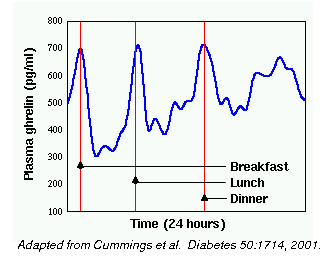
Endomembrane Role Play again (using Ghrelin and PYY as an example. (Ghrelin Graph)
1.) Big Ideas Notes: Homeostasis, Regulation, Feedback Inhibition, Positive Feedback Loophole, Exothermic (Exergonic), Endothermic (endergonic), Second Law of Thermodynamics. (Vocabulary).
2.) Cell Membrane Lecture:Chapter 5 Notes
3.) -Going through Passive Transport Types (Osmosis, Diffusion, Facilitated Diffusion) and Active Transport Types (Endo/Exo Cytosis, Sodium Potassium Pumps), hypertonic, isotonic, hypotonic
Thursday:Surface Area.
SWBAT: Describe the structure and function of the cell membrane, and free energy changes.
1.) Review Energy Transfers
2.) Chapter 4 Notes
3.) Cell Stories Act Out in Groups of 5
Friday: Leaf Collections?
1.) Review Energy Transfers
2.) Interdependence Activity: Select 4 pairs of two cell parts and describe how they are interdependent on each other.
3.) Cell Parts Review
Monday: Surface Area to Volume looking at your leaves and looking a absorbtive materials. List from high to low.
Using Dissecting Scopes to examine surface area/cohesion of water. Creating a table of Structure/Function/Questions.
Part of Cell Membrane-Function
Fluid Mosaic Model-go over images from CD.
Phospholipid-Stop large and polar particles from moving through.
Protein-Allow for transport of larger molecules, recieve signals
Glycoprotein-"cellular name tag" help communication
Cholesterol (a steroid)-increase rigidity within the membrane
Extra Time: Interdependence between cell parts.
Tuesday: Surface Area to Volume Ratios Agar with Phenolphalthein in Sodium Hydroxide.
http://www.flinnsci.com/documents/demopdfs/biology/bf10110.pdf
Extra Time: Cell Cards
Wednesday: Looking at the Mitochondria and Choloroplasts as surface area?
Carrots and corn syrup lab.
Going Over Rest of Pics from Chapters 4 and 5
Respiration lab demo with yeast and sucrose in hot/cold/room temperature water.
Thursday:
Chapters 4 and 5 test
Friday:
Chapter 6, Sugar breakdown book creation/start, variables impacting yeast breakdown of sugar.
Monday: Digging down quick activity?
History of Life with sheets activity.
Tuesday
Cell Cycle
Mitosis with paper modes, Nobel Prize Game
Subscribe to:
Comments (Atom)