Wednesday 8/24
Goal: Students describe how water dissolves sugar at the molecular level.
Water Video
-Quick Review Dehydration Synthesis/Hydrolysis, Macromolecules
More Molecules (Chapter 3)
Sugar Molarity Taste Testing Lab. (Functional Groups, Concentration, Standard Curve)
Thursday 8/25
SWBAT: Describe the structure and Function of Different BioMolecule Groups.
3.6-3.7 Polysaccharides
-Glycogen vs. Starch vs. Cellulose
3.8 Lipids
-Show how glycerol reacts with three fatty acids
-Saturated vs. Unsaturated
3.9 Phospholipids
-Glycerol + 2 Fatty Acids + 1 Phosphate
3.11 Proteins
-Amino Acids on Cards and Bonding together as a long chain as a class.
-Go over amino acid categories.
3.12 Amino Acids
Peptide Bond Formation Showing on Paper
Friday 8/26
Toothpickase Lab.
Molecule Images: Describe the name and function as you go around the room.
When done: Which do you prefer first my sketches and talking or video?
-Molecules and shapes/dehydration synthesis/Notes
-Playdoh shapes of molecules/pipe cleaner shapes of molecules create a model/take a picture and post to flickr.
-Chapter 3 Vocab discussion.
Monday
SWBAT: Plan out the two trials they want to run for tomorrow's enzyme catalysis lab.
Quick Review Dehydration Synthesis/Hydrolysis, Macromolecules, Functional Groups, Protein Structure and Function.
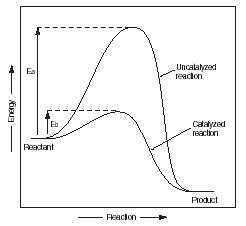
-Go over peroxide breakdown reaction and energy diagram (activation energy etc.)
Enzyme Catalyzed Reaction graph.
Another Graph.
-Show students gas pressure sensors, and how to use them do a trial run, show them how to determine the rate of reaction.
-Creating a hypothesis...
Tomorrow you will complete two trials...Where you just change one variable between the two trials (potential variables-type of potato, cooked vs. raw potato, raw vs. acid treated, different amounts of potato). In your lab notebook...write out variable you want to change and all of the steps necessary to test that variable (describe how much potato, what type of potato, how much peroxide, shaking instructions, on one side and reason why you are testing it on the other). Creating a data table
Two Columns: Time and Pressure (amount of oxygen generated)
Tuesday
SWBAT: Test the differences in reaction rates according to your plan from yesterday. Collect Data.
Go over 5.14 to 5.16
Wednesday
SWBAT: Review lab and whiteboard their results to share?
3.13 Protein Shape and Function-End of Section 5 of Lesson 6.
Amino Acids as People Activity
3.14 Protein Structure
3.16 Nucleotides
Ending Given Molecule Cards-Classify the card and Carbohydrate, Protein, Nucleic Acid, or Lipid. Write down important functional groups, and determine the job of the molecule based on its function.
Thursday
Molecules, Structure and Function. Given a Function use your text book to create a pipe cleaner representation of that molecule. Send Images to reason42center@photos.flickr.com
Friday
Potato Observations and Cell Membrane Notes at the molecular level.
-Creating Pipe Cleaner Models of molecules that serve specific functions.
-5.10 to 5.16
Tuesday:
Test Chapter 1-3, 5.14-5.16
Wednesday:
1.) Story of Cells (Signal, Two types-Hydrophobic-(steroids) signals vs. hydrophilic (water soluble) signals. Signal goes to the nucleus activates a gene, transcription/Translation at ribosome, Rough endoplasmic reticulum, golgi body, vesicle.
-Other activities-get food vacuole, mitochondria, chloroplasts, maintaining shape moving objects-microtubules, microfilaments etc., cilia, flagella.
-Cells in water around the room and massing the cells at each station (Graphing: Salt concentration vs. Mass gained)
Reading Chapter 4: Create Two Column Notes: For each Section: 2 things you already knew, 2 things that are new to you.
2.) Practice AP Questions/Essays from
3.) Going through the cell membrane role play.
Phospholipid walls: 7000 nm X-Chromosome, Lysosome 1000 nm, 3200 nm mitochondria, ribosome 30 nm, phospholipid 3.0 nm, water (polar) .275 nm, glucose (polar) .900 nm, Carbon Dioxide,
Thursday
Determining the solute concentration of potato cells, setting up dialysis bags and potatoes for tomorrow.
Friday:
Measuring and graphing % change for the different bags of sucrose and the potatoes.
Monday:
Cell Membrane Lecture:
-Going through Passive Transport Types (Osmosis, Diffusion, Facilitated Diffusion) and Active Transport Types (Endo/Exo Cytosis, Sodium Potassium Pumps), hypertonic, isotonic, hypotonic
Tuesday:
Wednesday, August 24, 2011


Wednesday, June 29, 2011
First Two Weeks-Evolution basics and Chemistry of Life start.
Monday: SWBAT: demonstrate what they know about DNA and the "Genius in All of Us" summer reading.
Can you learn something without me telling you?
1.) Draw your picture of DNA in your notebook and any questions you have about DNA.
2.) Hand out a ball and stick model of DNA, have students redraw their DNA and any questions you now have.
3.) Hand out a schematic/scientific diagram of DNA and have students draw their DNA and any new questions you know have.
4.) Tomorrow is quiz over book you can use your handout. Are there any questions over the book? Big biology idea on back board.
5.) White boarding main idea of the book/Questions you have/best part of book.
-Working on discussion procedure.
6.) Why I teach Biology. (human health, we all take care of others, understanding the universe)
7.) Assignment: Get another composition notebook by Wednesday (Put name on it keep it in class, Lab Notebook).
-Cell Parts and functions analogy handout.
8.) Working on filling out a notecard (information). (First and Last Name, something interesting about yourself, favorite science activity, one question for me, on back what is your lifetime ambition).
9.) Use your post it note to write down one thing you know about one of the four main themes of AP Biology.
10.) Expectations powerpoint.
Tuesday: SWBAT: Create analogies for all cell parts.
DNA What you know activity (on looseleaf)...
1.) Book quiz, you can use your answer from the questions.
2.) Completing Online Sign-Up for google accounts, edmodo sign in.
ASSIGNMENT: Analogy Assignment Due Tomorrow.
ASSIGNMENT: Outline and Frayer Vocab Notecard 1.1-1.10 (p. 1-12 by Thursday)
Wednesday (Maple Seeds and Fan):SWBAT describe cell parts and natural selection.
COLLECT CELL PART ANALOGIES. Biology Pyramid
-Emergent Properties: Hierarchy of Organization Review using papers from last year--Emergent Properties. Jayna has properties and Alex has properties, together they have different properties.
-Natural Selection: Maple Seed Selection and Natural Selection (pick one out and let's see who's wins (1.6 Discussion)
-Three Domains: Classification of Life Activity with Phylum Cards and Then discuss the Three Domains of Life (1.5)
-Properties of Life: Is it alive quick review (common features of life)
-Controlled Experiments: Snake hypothesis testing review.
-Placing vocabulary cards from post-it notes onto the main themes of biology after going over these words.
Thursday: SWBAT describe the shape of water and its unique properties.
-Go Over Frayer Cards from Chapter 1, Placement of Frayer Words into 8 key themes of biology, Addressing Chapter 1 Issues.
-Paper clip floating, students play to get as many as they can.
-White Boarding "Explain what you think is happening"
-In words, in pictures and can you use math?
-Water Observations:
Paper clips and water bugs floating.
Water climbing up paper towels
Weighing plants before and after
Water on dry surface vs. water on an oil surface
Why does ice float on water?
-Water molecules and play doh with toothpicks. How does the shape support paper clips and water bugs.
Friday: SWBAT describe the key terms from chapter 2 and shape of water and its unique properties.
-Water Lab Continued with Using models to show how water interacts with detergent. Put on your table and see how other groups have done theirs.
-Peroxidase demonstration, whiteboarding.
Monday SWBAT describe the different structures and functions of molecules that make up life.
Show Electronegativity Chart: C=2.4, H=2.1, N=3.0, O=3.5, P=2.1
Tug of War Between Individuals to have placements 1 through 5. Give the winner a big O, Loser H, 2nd Place N, 3rd C, 4th P or H
-Water Open Access Video
-Show Open Access Website.
Quick Molecule powerpoint review from freshman year.
-Create Column for examples of Polar vs. Nonpolar Start with Bond/Functional Group Examples, then go to molecules (Hydrophilic vs. Hydrophobic)
-Show Peroxide in Potatoes Demonstration. Try to get them to figure out the chemical reaction going on. Facts: H2O2, O2 is a gas, H2 is a gas.
Gas tests: Hydrogen, Oxygen
HW: Notecards over Chapter 2 Due Tomorrow.
Tuesday or Wednesday
Chapter 3 Functional Groups Need to be understood/memorized.
Notes: Structure and Function is the Big Idea
3.1 Organic Compounds Video Section 2:
-Carbon to Carbon Bonds
-Carbon Forms 4 bonds in compounds (very versatile)
Isomers
-Glucose and Fructose
-L-Dopa vs. D-Dopa
3.2 Functional Groups (Organic Molecules get their characteristics from these)
Hydrophilic (Hydroxyl, Carbonyl, Carboxyl, Amino, Phosphate, Thiol, Sulfide) vs. Hydrophobic (Methyl)
3.3 From small to large and from large to small.
-Dehydration Synthesis and Hydrolysis Role Play
-Sketch and Notes for Dehydration Synthesis and Hydroylsis
3.4 Monosaccharides Video Section Part 3.
-Go over numbering of carbon atoms
-CH2O
-Glucose vs. Fructose (hexoses)
-Deoxyribose vs. Ribose (pentoses)
3.5 Production of Dissacharides
Dehydration Reaction Application
3.6-3.7 Polysaccharides
-Glycogen vs. Starch vs. Cellulose
3.8 Lipids
-Show how glycerol reacts with three fatty acids
-Saturated vs. Unsaturated
3.9 Phospholipids
-Glycerol + 2 Fatty Acids + 1 Phosphate
3.11 Proteins
-Amino Acids on Cards and Bonding together as a long chain as a class.
-Go over amino acid categories.
3.12 Amino Acids
Peptide Bond Formation Showing on Paper
3.13 Protein Shape and Function-End of Section 5 of Lesson 6.
Pipe Cleaner Activity
3.14 Protein Structure
3.16 Nucleotides
Ending Given Molecule Cards-Classify the card and Carbohydrate, Protein, Nucleic Acid, or Lipid. Write down important functional groups, and determine the job of the molecule based on its function.
When done: Which do you prefer first my sketches and talking or video?
-Molecules and shapes/dehydration synthesis/Notes
-Playdoh shapes of molecules/pipe cleaner shapes of molecules create a model/take a picture and post to flickr.
-Chapter 3 Vocab discussion.
Tuesday or Wednesday
Goal: Students describe how water dissolves sugar at the molecular level.
-Quick Review Dehydration Synthesis/Hydrolysis, Macromolecules
More Molecules (Chapter 3)
Sugar Molarity Taste Testing Lab. (Functional Groups, Concentration, Standard Curve)
Thursday
-Quick Review Dehydration Synthesis/Hydrolysis, Macromolecules
-Enzyme reaction rate with toothpicks lab.
Friday Creating an Experiment
-Devise a variable to test in the hydrogen peroxide breakdown by potatoes.
-Creating Pipe Cleaner Models of molecules that serve specific functions.
-5.14 to 5.16
Monday
Reading Chapter 4: Create Two Column Notes: For each Section: 2 things you already knew, 2 things that are new to you.
-Practice AP Questions/Essays from
Tuesday
Actual Enzyme Reaction Rate Lab (Using pressure sensors)
Wednesday
Test Chapters 1-3, 5.10-5.16, (Potatoes in water demonstration: How do we quantify this?")
Thursday
SWBAT: Determine the salt concentration in a potato cell.
Potatos in water and salt percent change lab.
Friday
Youtube Kidney Dialysis Video
Dialysis Bag Lab
Monday
Cell Membrane Lecture Going through Passive Transport Types (Osmosis, Diffusion, Facilitated Diffusion) and Active Transport Types (Endo/Exo Cytosis, Sodium Potassium Pumps)
Thursday
-Outline 13.1-13.3 (pg. 255-259): Four Corners notes: I was reminded of, I was confused about..., I learned...(Due Thursday)
Wednesday: Driving Question "How did all of the forms of life appear on earth."
-Using Population Data of Speciation events to complete four corner whiteboard of different scenarios.
-Students graph the data for three different situations of speciation and describe what happened.
-Outline 13.4-13.8 (pg. 259-266)
Thursday:
-Given phylum and group cards (Better than freshman year), students create a tree of life with descriptions of each of the branches that set the organisms apart.
-Outline 13.11-13.17
Friday: Evidence of Evolution Notes:
-Homologous Structures, Vestigial Structures, Analogous Structures, Adaptations, Chapter 13.
Brief gene, protein, allele review. How do we know if a population is evolving? What is the frequency of recessive alleles in a population? Hardy-Weinberg Equilibrium Answers that question. p^2+2pq+q^2. Notes, and Lab.
Hardy-Weinberg Activity
Monday:
-Hardy Weinberg Laboratory with PTC. How many people are heterozygous? Reading 13.9-13.10 (266-267)
Tuesday: Goal: Students Chapter 14 Explore activity (revisit Selective Pressures activity. Reading 14.1-14.3 276-279.
Wednesday: Goal: Adaptive Radiation examples whiteboarding. 14.4-14.10
Thursday: Where did Chloroplasts and Mitochondria come from?
Goal: Activities related to reviewing Evolution-Endosymbiosis pieces of evidence. Give students the pieces of evidence and have students provide an explanation as to how this is possible.
-Mitochondria have their own outer membrane.
-Mitochondria have their own DNA.
-Mitochondria are the size of a typical bacteria.
-Early, large, anaerobic bacteria did not efficiently obtain energy from their food because they could not use oxygen bacteria.
-Aerobic bacteria are efficient at obtaining energy from their food.
-Chloroplasts have their own outer membrane.
-Chloroplasts have their own DNA.
-Chloroplasts are the size of a typical cyanobacteria.
-Early, large, aerobic bacteria did need oxygen.
-Aerobic bacteria are efficient at obtaining energy from their food when they have oxygen.
Where did chloroplasts and mitochondria come from?
Friday: Test Chapters 13, 14, Cell Parts Hand out, Endosymbiosis.
-Go to orchard to figure out how to have more apples/pears for next year.
-Students take pictures of diseases, pears, and apples and send photos to reason42center@photos.flickr.com
-Come in, break into groups and determine: Name, Characteristics, Human Preventive Measures
-Continue with investigation into Apple/Pear Diseases (Completing Sheet and Giving Small Presentations)
-Percent mass and water loss lab.
Data Table: Initial Mass, Final Mass, Change in Mass, Tablespoons of Salt in the Cup
Can you learn something without me telling you?
1.) Draw your picture of DNA in your notebook and any questions you have about DNA.
2.) Hand out a ball and stick model of DNA, have students redraw their DNA and any questions you now have.
3.) Hand out a schematic/scientific diagram of DNA and have students draw their DNA and any new questions you know have.
4.) Tomorrow is quiz over book you can use your handout. Are there any questions over the book? Big biology idea on back board.
5.) White boarding main idea of the book/Questions you have/best part of book.
-Working on discussion procedure.
6.) Why I teach Biology. (human health, we all take care of others, understanding the universe)
7.) Assignment: Get another composition notebook by Wednesday (Put name on it keep it in class, Lab Notebook).
-Cell Parts and functions analogy handout.
8.) Working on filling out a notecard (information). (First and Last Name, something interesting about yourself, favorite science activity, one question for me, on back what is your lifetime ambition).
9.) Use your post it note to write down one thing you know about one of the four main themes of AP Biology.
10.) Expectations powerpoint.
Tuesday: SWBAT: Create analogies for all cell parts.
DNA What you know activity (on looseleaf)...
1.) Book quiz, you can use your answer from the questions.
2.) Completing Online Sign-Up for google accounts, edmodo sign in.
ASSIGNMENT: Analogy Assignment Due Tomorrow.
ASSIGNMENT: Outline and Frayer Vocab Notecard 1.1-1.10 (p. 1-12 by Thursday)
Wednesday (Maple Seeds and Fan):SWBAT describe cell parts and natural selection.
COLLECT CELL PART ANALOGIES. Biology Pyramid
-Emergent Properties: Hierarchy of Organization Review using papers from last year--Emergent Properties. Jayna has properties and Alex has properties, together they have different properties.
-Natural Selection: Maple Seed Selection and Natural Selection (pick one out and let's see who's wins (1.6 Discussion)
-Three Domains: Classification of Life Activity with Phylum Cards and Then discuss the Three Domains of Life (1.5)
-Properties of Life: Is it alive quick review (common features of life)
-Controlled Experiments: Snake hypothesis testing review.
-Placing vocabulary cards from post-it notes onto the main themes of biology after going over these words.
Thursday: SWBAT describe the shape of water and its unique properties.
-Go Over Frayer Cards from Chapter 1, Placement of Frayer Words into 8 key themes of biology, Addressing Chapter 1 Issues.
-Paper clip floating, students play to get as many as they can.
-White Boarding "Explain what you think is happening"
-In words, in pictures and can you use math?
-Water Observations:
Paper clips and water bugs floating.
Water climbing up paper towels
Weighing plants before and after
Water on dry surface vs. water on an oil surface
Why does ice float on water?
-Water molecules and play doh with toothpicks. How does the shape support paper clips and water bugs.
Friday: SWBAT describe the key terms from chapter 2 and shape of water and its unique properties.
-Water Lab Continued with Using models to show how water interacts with detergent. Put on your table and see how other groups have done theirs.
-Peroxidase demonstration, whiteboarding.
Monday SWBAT describe the different structures and functions of molecules that make up life.
Show Electronegativity Chart: C=2.4, H=2.1, N=3.0, O=3.5, P=2.1
Tug of War Between Individuals to have placements 1 through 5. Give the winner a big O, Loser H, 2nd Place N, 3rd C, 4th P or H
-Water Open Access Video
-Show Open Access Website.
Quick Molecule powerpoint review from freshman year.
-Create Column for examples of Polar vs. Nonpolar Start with Bond/Functional Group Examples, then go to molecules (Hydrophilic vs. Hydrophobic)
-Show Peroxide in Potatoes Demonstration. Try to get them to figure out the chemical reaction going on. Facts: H2O2, O2 is a gas, H2 is a gas.
Gas tests: Hydrogen, Oxygen
HW: Notecards over Chapter 2 Due Tomorrow.
Tuesday or Wednesday
Chapter 3 Functional Groups Need to be understood/memorized.
Notes: Structure and Function is the Big Idea
3.1 Organic Compounds Video Section 2:
-Carbon to Carbon Bonds
-Carbon Forms 4 bonds in compounds (very versatile)
Isomers
-Glucose and Fructose
-L-Dopa vs. D-Dopa
3.2 Functional Groups (Organic Molecules get their characteristics from these)
Hydrophilic (Hydroxyl, Carbonyl, Carboxyl, Amino, Phosphate, Thiol, Sulfide) vs. Hydrophobic (Methyl)
3.3 From small to large and from large to small.
-Dehydration Synthesis and Hydrolysis Role Play
-Sketch and Notes for Dehydration Synthesis and Hydroylsis
3.4 Monosaccharides Video Section Part 3.
-Go over numbering of carbon atoms
-CH2O
-Glucose vs. Fructose (hexoses)
-Deoxyribose vs. Ribose (pentoses)
3.5 Production of Dissacharides
Dehydration Reaction Application
3.6-3.7 Polysaccharides
-Glycogen vs. Starch vs. Cellulose
3.8 Lipids
-Show how glycerol reacts with three fatty acids
-Saturated vs. Unsaturated
3.9 Phospholipids
-Glycerol + 2 Fatty Acids + 1 Phosphate
3.11 Proteins
-Amino Acids on Cards and Bonding together as a long chain as a class.
-Go over amino acid categories.
3.12 Amino Acids
Peptide Bond Formation Showing on Paper
3.13 Protein Shape and Function-End of Section 5 of Lesson 6.
Pipe Cleaner Activity
3.14 Protein Structure
3.16 Nucleotides
Ending Given Molecule Cards-Classify the card and Carbohydrate, Protein, Nucleic Acid, or Lipid. Write down important functional groups, and determine the job of the molecule based on its function.
When done: Which do you prefer first my sketches and talking or video?
-Molecules and shapes/dehydration synthesis/Notes
-Playdoh shapes of molecules/pipe cleaner shapes of molecules create a model/take a picture and post to flickr.
-Chapter 3 Vocab discussion.
Tuesday or Wednesday
Goal: Students describe how water dissolves sugar at the molecular level.
-Quick Review Dehydration Synthesis/Hydrolysis, Macromolecules
More Molecules (Chapter 3)
Sugar Molarity Taste Testing Lab. (Functional Groups, Concentration, Standard Curve)
Thursday
-Quick Review Dehydration Synthesis/Hydrolysis, Macromolecules
-Enzyme reaction rate with toothpicks lab.
Friday Creating an Experiment
-Devise a variable to test in the hydrogen peroxide breakdown by potatoes.
-Creating Pipe Cleaner Models of molecules that serve specific functions.
-5.14 to 5.16
Monday
Reading Chapter 4: Create Two Column Notes: For each Section: 2 things you already knew, 2 things that are new to you.
-Practice AP Questions/Essays from
Tuesday
Actual Enzyme Reaction Rate Lab (Using pressure sensors)
Wednesday
Test Chapters 1-3, 5.10-5.16, (Potatoes in water demonstration: How do we quantify this?")
Thursday
SWBAT: Determine the salt concentration in a potato cell.
Potatos in water and salt percent change lab.
Friday
Youtube Kidney Dialysis Video
Dialysis Bag Lab
Monday
Cell Membrane Lecture Going through Passive Transport Types (Osmosis, Diffusion, Facilitated Diffusion) and Active Transport Types (Endo/Exo Cytosis, Sodium Potassium Pumps)
Thursday
-Outline 13.1-13.3 (pg. 255-259): Four Corners notes: I was reminded of, I was confused about..., I learned...(Due Thursday)
Wednesday: Driving Question "How did all of the forms of life appear on earth."
-Using Population Data of Speciation events to complete four corner whiteboard of different scenarios.
-Students graph the data for three different situations of speciation and describe what happened.
-Outline 13.4-13.8 (pg. 259-266)
Thursday:
-Given phylum and group cards (Better than freshman year), students create a tree of life with descriptions of each of the branches that set the organisms apart.
-Outline 13.11-13.17
Friday: Evidence of Evolution Notes:
-Homologous Structures, Vestigial Structures, Analogous Structures, Adaptations, Chapter 13.
Brief gene, protein, allele review. How do we know if a population is evolving? What is the frequency of recessive alleles in a population? Hardy-Weinberg Equilibrium Answers that question. p^2+2pq+q^2. Notes, and Lab.
Hardy-Weinberg Activity
Monday:
-Hardy Weinberg Laboratory with PTC. How many people are heterozygous? Reading 13.9-13.10 (266-267)
Tuesday: Goal: Students Chapter 14 Explore activity (revisit Selective Pressures activity. Reading 14.1-14.3 276-279.
Wednesday: Goal: Adaptive Radiation examples whiteboarding. 14.4-14.10
Thursday: Where did Chloroplasts and Mitochondria come from?
Goal: Activities related to reviewing Evolution-Endosymbiosis pieces of evidence. Give students the pieces of evidence and have students provide an explanation as to how this is possible.
-Mitochondria have their own outer membrane.
-Mitochondria have their own DNA.
-Mitochondria are the size of a typical bacteria.
-Early, large, anaerobic bacteria did not efficiently obtain energy from their food because they could not use oxygen bacteria.
-Aerobic bacteria are efficient at obtaining energy from their food.
-Chloroplasts have their own outer membrane.
-Chloroplasts have their own DNA.
-Chloroplasts are the size of a typical cyanobacteria.
-Early, large, aerobic bacteria did need oxygen.
-Aerobic bacteria are efficient at obtaining energy from their food when they have oxygen.
Where did chloroplasts and mitochondria come from?
Friday: Test Chapters 13, 14, Cell Parts Hand out, Endosymbiosis.
-Go to orchard to figure out how to have more apples/pears for next year.
-Students take pictures of diseases, pears, and apples and send photos to reason42center@photos.flickr.com
-Come in, break into groups and determine: Name, Characteristics, Human Preventive Measures
-Continue with investigation into Apple/Pear Diseases (Completing Sheet and Giving Small Presentations)
-Percent mass and water loss lab.
Data Table: Initial Mass, Final Mass, Change in Mass, Tablespoons of Salt in the Cup
Sunday, May 8, 2011
AP Summer Assignment/Expectations
Student Expectations
• Do one hour of homework every night and come to class prepared
• Be prepared with assignments
• Show the extra commitment that lab work may require (possible before/after school to complete lab work)
• Follow the safety and behavior requirements of the course
• Attend any extra study/review periods that are held during the year
• Be responsible for making up any work that is missed
• Complete any summer or vacation assignments that may be required

The Goals of AP Biology:
1.) Get you ready for college science classes.
2.) Have you score a 3, 4, or 5 on the AP Biology test to save you money and time in college.
3.) Keep you moving and motivated on your path to improve the world.
This Summer's Assignment is to...
1.) Read the "Genius in All of Us." Available used on Amazon. Also available at the New Carlisle Library.
Focus on the impacts our behavior and environment have on our own genes.
Focus on the section about track and field runners.
Answer the questions on the handout for AP Summer Reading Assignment.
2.) Review and know the vocabulary list.
Most of these words are from freshman biology. Knowing them will help throughout AP Biology and also on the quiz that is the second day of school next fall.
3.) Sign Up for a school appropriate Google Account.
4.) Sign Up for Edmodo.com "I'm a student" Group Name: GensicAPBiology Code: snk7ya
Go to notifications, sign up to get Alerts sent straight to your cell phone.
5.) Questions? Post a Comment to this blog.
6.) Optional: Get a AP Biology Study Book/App. There are many AP Biology Study Apps on the App Store. I don't know enough about these to endorse one. Read the reviews, look at the App previews. Studying more will only help you.
• Do one hour of homework every night and come to class prepared
• Be prepared with assignments
• Show the extra commitment that lab work may require (possible before/after school to complete lab work)
• Follow the safety and behavior requirements of the course
• Attend any extra study/review periods that are held during the year
• Be responsible for making up any work that is missed
• Complete any summer or vacation assignments that may be required

The Goals of AP Biology:
1.) Get you ready for college science classes.
2.) Have you score a 3, 4, or 5 on the AP Biology test to save you money and time in college.
3.) Keep you moving and motivated on your path to improve the world.
This Summer's Assignment is to...
1.) Read the "Genius in All of Us." Available used on Amazon. Also available at the New Carlisle Library.
Focus on the impacts our behavior and environment have on our own genes.
Focus on the section about track and field runners.
Answer the questions on the handout for AP Summer Reading Assignment.
2.) Review and know the vocabulary list.
Most of these words are from freshman biology. Knowing them will help throughout AP Biology and also on the quiz that is the second day of school next fall.
3.) Sign Up for a school appropriate Google Account.
4.) Sign Up for Edmodo.com "I'm a student" Group Name: GensicAPBiology Code: snk7ya
Go to notifications, sign up to get Alerts sent straight to your cell phone.
5.) Questions? Post a Comment to this blog.
6.) Optional: Get a AP Biology Study Book/App. There are many AP Biology Study Apps on the App Store. I don't know enough about these to endorse one. Read the reviews, look at the App previews. Studying more will only help you.
Subscribe to:
Comments (Atom)